Pages

Minggu, 24 Februari 2019

Teaching English Pronunciation Using Film

Assalamualaikum wr.wb
Hi everyone, this is my first post in 2019! In this post I would like to share about my self-reflection International Journal. What will i share? I would like to share the format of the journal, a little explain the intorduction from the journal that I've chosen, and the reason why I choose this journal.

The general format of my journal consists of:
1. Title;
2. Abstract;
3. Introduction;
4. Literature Review;
5. Method
6. Discussion;
7. Conclusion;
8. References.

The introduction from the journal that I've chosen
Mastery of English has been problems to many Indonesian students. Even though English is a general foreign language taught in every school, most of Indonesian students are still anxious to communicate using English.  In Indonesia, the aim of teaching English, as adopted by the government, is to develop communicative competence of the learners (Tantri, 2013; p. 38). It is necessary to understand and comprehend pronunciation because pronouncing a language is a key aspect to comprehend and being comprehended. James (cited in Sabarish, 2014) stated that audio-visual aids are any device which can be used to make the learning experience more concrete, more realistic and more dynamic. Film can be useful media to Handayani, Teaching English pronunciation using film 195 teach some skills in English including pronunciation. The use of film is aimed to improve the students’ pronunciation ability in interesting way. It is also a familiar medium for students to keep their interest in theories and concept (Champoux&Anderson, 2007; p. 15).  in tthe journal, the researcher try to use film as media to teach chosen students in pronunciation and find out how effective it could be. 

The reason why I choose this journal.


The reason I chose the journal was because I was interested only by reading the title. As is known, learning pronuciation is not an easy thing for Indonesian students. I want to read more about the journal because I want to know whether the use of film to learn pronunciation is effective to use. Because, I also learning how to pronounce English words well.


source
Kompas.com with the title "Guide to Writing a Scientific Journal", 

Rabu, 05 Desember 2018

Review The Power of Habit Chapter 8 and 9

Assalamualaikum wr.wb
In this post I would like to give the last review from the book “THE POWER OF HABIT”.
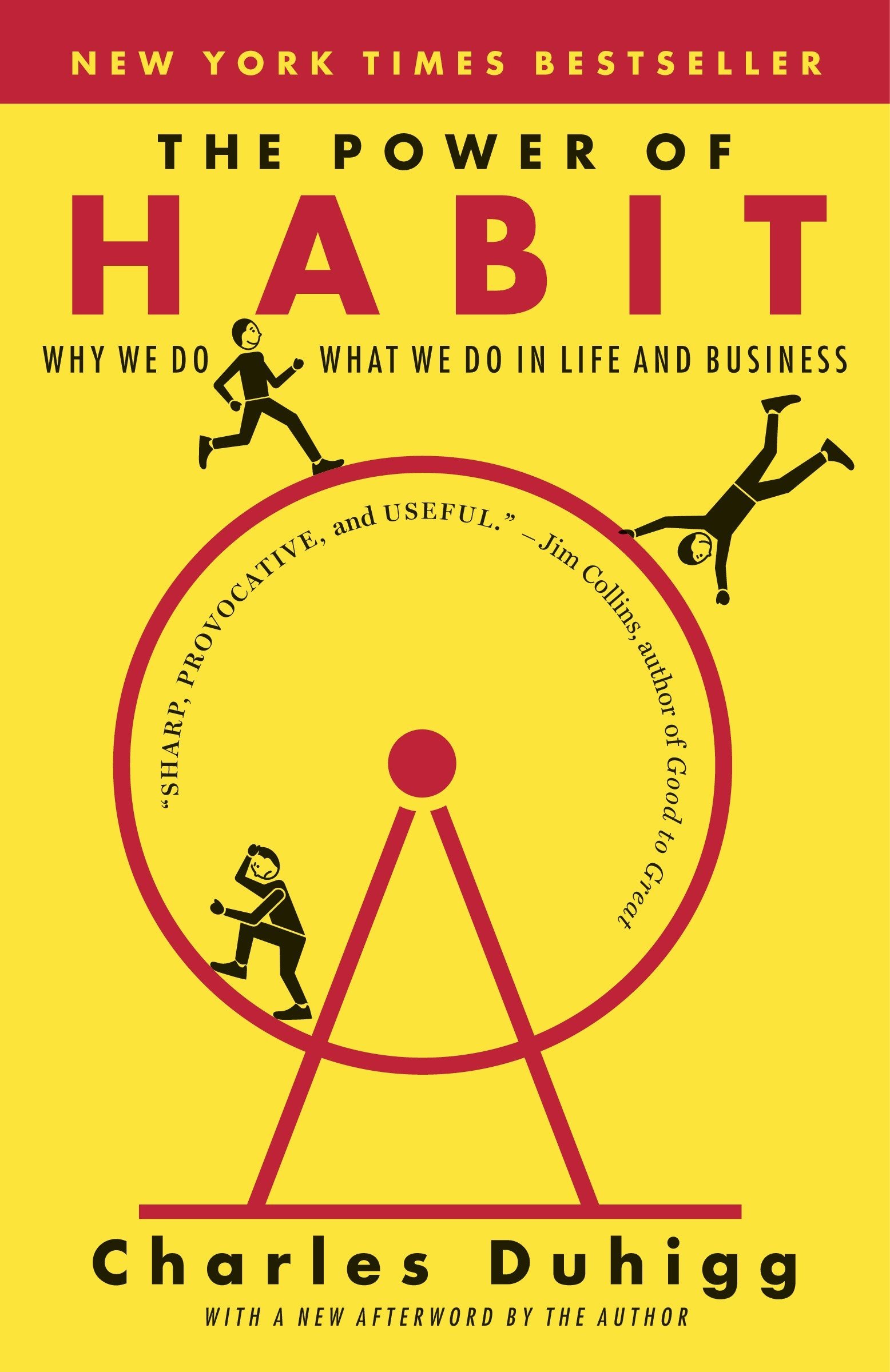
Hasil gambar untuk the power of habit
Check this bellow!!
PART III THE HABITS OF SOCIETIES
CHAPTER 8 - SADDLEBACK CHURCH AND THE MONTGOMERY BUS BOYCOTT
How Movements Happen

It was Thursday, December 1, 1955, in Montgomery, Alabama, and she had just fi nished a long day at Montgomery Fair, the department store where she worked as a seamstress. The bus was crowded and, by law, the fi rst four rows were reserved for white passengers. The area where blacks were allowed to sit, in the back, was already full and so the woman— Rosa Parks— sat in a center row, right behind the white section, where either race could claim a seat. Soon, all the rows were filled The bus driver, James F. Blake, seeing the white man on his feet, shouted at the black passengers in Parks’s area to give up their seats, but no one moved.
At that moment, though no one on that bus knew it, the civil rights movement pivoted. That small refusal was the fi rst in a series of actions that shifted the battle over race relations from a struggle fought by activists in courts and legislatures into a contest that would draw its strength from entire communities and mass protests.
Over the next year, Montgomery’s black population would rise up and boycott the city’s buses, ending their strike only once the law segregating races on public transportation was stricken from the books. But that isn’t the whole story. Rosa Parks and the Montgomery bus boycott became the epicenter of the civil rights campaign not only because of an individual act of defi ance, but also because of social patterns.
Parks’s experiences offer a lesson in the power of social habits— the behaviors that occur, unthinkingly, across dozens or hundreds or thousands of people which are often hard to see as they emerge, but which contain a power that can change the world. Social habits are what fi ll streets with protesters who may not know one another, who might be marching for different reasons, but who are all moving in the same direction. Social habits are why some initiatives become world- changing movements, while others fail to ignite. And the reason why social habits have such infl uence is because at the root of many movements— be they large- scale revolutions or simple fluctuations in the churches people attend— is a three- part process that historians and sociologists say shows up again and again:
1.  A movement starts because of the social habits of friendship and the strong ties between close acquaintances.
2.  It grows because of the habits of a community, and the weak ties that hold neighborhoods and clans together.
3.  And it endures because a movement’s leader gives participants new habits that create a fresh sense of identity and a feeling of ownership.
Only when all three part of this process are fulfilled can a movement become self-propelling and reach a critical mass.
Our deepest relationships tend to be with people who look like us, earn about the same amount of money, and come from a similar background.
There´s a natural instinct embedded in friendship, a sympathy that makes us willing to fight for someone we like when they are treated unjustly. Studies show that people have no problem ignoring stranger’s injuries, but when a friend is insulted, our sense of outrage is enough to overcome the inertia that usually makes protests hard to organize.
CHAPTER 9 - THE NEUROLOGY OF FREE WILL
Are We Responsible for Our Habits?

William James: All our life, so far as it has a definite form, is but a mass of habits-practical, emotional, and intellectual-systematically organized for our weal or woe, and bearing us irrestibly toward our destiny, whatever the latter may be.
James was from an accomplished family. In his thirties, he was the only unaccomplished one in the family. He was sick as a child. Tried hand at many weird things and quit. One day he wrote in his diary, “Today, I about touched bottom, and perceive plainly that I must face choice with open eyes. Shall I frankly throw the moral business overboard, as one unsuited to my innate aptitudes?”
Two months later, James made a decision. Before attempting anything rash, he would conduct a yearlong experiment. He would spend twelve months believing that he had control over himself and his destiny, that he could become better, that he had the free will to change. There was no proof that it was true. But he would free himself to believe, all evidence to the contrary, that change was possible. He wrote in his diary, “I think that yesterday was a crisis in my life.” Regarding his ability to change, “I will assume for the present-until next year-that it is no illusion. My first act of free will shall be to believe in free will.”
Over the next year, he practiced every day. In his diary, he wrote as if his control over himself and his choices was never in question. He got married, and he spent time with successful people in different walks of life. Two years later, he wrote to Charles Renouvier, the philosopher, who expounded at length on free will. “I must not lose this opportunity of telling you of the admiration and gratitude which have been excited in me by reading your Essais. Thanks to you I possess for the first time an intelligible and reasonable conception of freedom... I can say that through that philosophy I am beginning to experience a rebirth of the moral life; and I can assure you, sir, that this is no small thing.”
Later, he would famously write that the will to believe is the most important ingredient in creating belief in change. And that one of the most important methods for creating that belief was habits. Habits, he noted, are what allow us to “do a thing with difficulty the first time, but soon do it more and more easily, and finally, with sufficient practice, do it semi-mechanically, or with hardly any consciousness at all.” Once we choose who we want to be, people grow “to the way in which they have been exercised, just as a sheet of paper or a coat, once creased or folded, tends to fall forever afterward into the same identical folds.”
If you believe you can change-if you make it a habit- the change becomes real. This is the real power of habit: the insight that your habits are what you choose them to be. Once that choice occurs-and becomes automatic-it’s not only real, it starts to seem inevitable, the thing, as James wrote, that bears “us irresistibly toward our destiny, whatever the latter may be.”
The way we habitually think of our surroundings and ourselves create the worlds that each of us inhabit.
Habits are the unthinking choices and invisible decisions that surround us every day- and which, just by looking at them, become visible again.
William James wrote about habits and their central role in creating happiness and success. He added a special chapter on this in his masterpiece The Principles of Psychology.
Change may not be fast and it isn’t always easy. But with time and effort, almost any habit can be reshaped.
Habits are not destiny. We can choose our habits, once we know how. Any of them can be changed, if you understand how they function.
However, to modify a habit, you must decide to change it. You must consciously accept the hard work of identifying cues and rewards that drive the habit’s routines, and find alternatives. You must know you have control and be self conscious enough to use it.


My Experience Reading My Friend's Blogs


Assalamualaikum wr.wb
Hope you guys have amazing day J
I this post I would like to sharing my experience from reading other people’s blog.
Hasil gambar untuk reading blog


When my lecturer was given the task to read other people's blogs, I was happy. That is because I will read book reviews from other people and I will see what other people's blogs look like. Most of their blogs that I visit use a simple theme. 2 of the 5 blogs that I visit even use black themes and 3 of it use simple color. The appearance of their blog seems elegant in my opinion rather than my own who seems girly with a theme that is slightly flowering. The reviews of the books they read were interesting and easy to understand. There was one blog that reviewed the book until make me cry because the review of the book was very good. By reading book reviews from other people's blogs I got new knowledge.

When I get some responses from my friends at my blog, I feel very happy especially if it makes those who read my blog can get new knowledge. 
I wanna say thank you for everyone who give comment on my blog.

I think that’s enough for me.


Jumat, 30 November 2018

Review The Power of Habit Chapter 5,6, and 7


Assalamualaikum wr.wb
Welcome to my blog!!
I would like to continue my previous review so check this bellow.
Chapter 5: STARBUCKS AND THE HABIT OF SUCCESS – When Willpower Becomes Automatic

Howard Schulz, the man who built Starbucks into a colossus, had a very poor and troubled childhood. His mother would ask him little questions like “How are you going to study tonight? What are you going to do tomorrow? How do you know you are ready for the test?” It trained him to set goals.
Schulz says that he has been lucky. He believes that if you tell people that they have what it takes to succeed, they will prove you right.
Willpower is the single most important keystone habit for individual success.
Willpower isn’t just a skill. It is a muscle and it gets tired as it works harder, so there is less power left over for other things. If you want to do something that requires willpower – like going for a run after work – you have to conserve your willpower muscle during the day. If you use it up too early on tedious tasks like writing emails or filling out boring forms, all the strength will be gone by the time you get home.
How willpower becomes a habit: By choosing a certain behavior ahead of time, and then following that routine when an inflection point arrives.
When people are asked to do something that takes self-control, if they think they are doing it for personal reasons – if they feel like it´s a choice or something they enjoy because it helps someone else – it’s much less taxing. If they feel like they have no autonomy, if they´re just following orders, their willpower muscles get tired much faster.
Chapter 6: The power of crisis – creating habits through accident and design

The organizational habits— or “routines,” as Nelson and Winter called them— are enormously important, because without them, most companies would never get any work done. Routines provide the hundreds of unwritten rules that companies need to operate. They allow workers to experiment with new ideas without having to ask for permission at every step. Routines provide the hundreds of unwritten rules that companies need to operate. They allow workers to experiment with new ideas without having to ask for permission at every step. They provide a kind of organizational memory, so that managers don’t have to reinvent the sales process every six months or panic each time a VP quits. Routines reduce uncertainty.
Among the most important benefi ts of routines is that they create truces between potentially warring groups or individuals within an organization.
Companies aren’t families. They’re battlefi elds in a civil war.
Yet despite this capacity for internecine warfare, most companies roll along relatively peacefully, year after year, because they have routines— habits— that create truces that allow everyone to set aside their rivalries long enough to get a day’s work done. Organizational habits offer a basic promise: If you follow the established patterns and abide by the truce, then rivalries won’t destroy the company, the profi ts will roll in, and, eventually, everyone will get rich.
Truces are only durable when they create real justice. If a truce I unbalanced – if the peace isn’t real – the routines often fail when they are needed the most.
Creating successful organizations isn’t just a matter of balancing authority, for an organization to work, leaders must cultivate habits that both create a real and balanced peace and, paradoxically, make it absolutely clear who´s in charge.
A company with dysfunctional habits can’t turn around simply because a leader orders it. Rather, wise executives seek out moments of crisis – or create the perception of crisis – and cultivate the sense that something must change, until everyone is finally ready to overhand the patterns they live with each day.
Chapter 7: HOW TARGET KNOWS WHAT YOU WANT BEFORE YOU DO – When Companies Predict (and Manipulate) Habits
The first things you see upon entering the grocery store are the fruits and vegetables arranged in attractive, bountiful piles. If we start our shopping sprees by loading up on healthy stuff, we´re much more likely to buy Doritos or frozen pizza when we encounter them later on.
Peoples buying habits are more likely to change when they go through a major life event. When someone gets married, for example, they are more likely to start buying a new type of coffee.
Sticky songs are what you expect to hear on radio. Your brain secretly wants that song, because it’s so familiar o everything else you’ve already heard and liked. It just sounds right.
The areas in the brain that process music are designed to seek out patterns and look for familiarity. Our brains crave familiar music because familiarity is how we manage to hear without becoming distracted by all the sound. That’s why songs that sound familiar – even if you’ve never heard them before – are sticky. Our brains are designed to prefer auditory patterns that seem similar to what we´ve already heard. When Celine Dion releases a new song and it sounds the same as her previous songs, our brains unconsciously crave its recognizability and the song becomes sticky.
We react to the cues (this sounds like all the other songs I’ve ever liked) and rewards (its fun to hum along) and without thinking, we either start singing, or reach over and change station.
If you dress a new something in old habits, it’s easier for the public to accept it.


Senin, 26 November 2018

Procedure Text


Assalamualaikum wr.wb
Welcome back to my Blog ^_^
My post in this time is dedicated to fulfilling one of the task of Media Pembelajaran Bahasa Inggris. Before we discuss about what I will post, I would like to introduce my group members first.
  1. Dina Harun Al Rasyid
  2. Eka Ananda Putri
  3. Febryna Alawiyah Tanjung
  4. Ilham Prakoso
  5. Indah Sari Asih
  6. including me, Kartika Febiyanti
In this post, I would like to tell you about Procedure Text.

What is Procedure Text?
Procedure text is a text that is designed to describe how something is achieved through a sequence of actions or steps. It explains how people perform different processes in a sequence of steps. This text uses the simple present tense, often imperative sentences. It also uses the temporal conjunction such as first, second, then, next, finally, etc.
Types of procedure text
  1. Texts that explain how something works or how to use instruction/operation manuals. For example: how to use the CD player, the handphone, the radio, the printer, etc
  2. Texts that instruct how to do a particular activity. For Example: rules for games, road safety rules, recipes, science experiments, etc.
  3. Texts that deal with human behavior. For example: how to succeed, how to live happily, etc.

The generic structures of procedure text are  :
  1. Goals/aim: contains the purpose of the activity or thing that will be done or made later.
  2. Materials/tools: contains materials and sometimes the tools needed to make an item / do something. In procedure text, materials are optional or not always present.
  3. Steps: a series of steps or tips to do.
  4. Conclusion/result: contains the final results of what has been done in accordance with the steps taken.

Language Features of Procedure Text
In the Procedure Text, we use
  1. Imperative: command sentences such as cut the vegetables, pour the water, etc.
  2.  Simple present tense: using the first form (present) verb, such as serve, pour, place, and others.
  3. Action Verbs: verbs that indicate physical activities, such as mix, put, turn, and so on.
  4. Connective of sequence: conjunctions that connect one step to another, such as then, while, next, after that, and so on.
  5. Numbering: numbers that indicate the sequence of activities, for example first, second, third, and others.

Generic Structure of Procedure
  1. Goal: It is contains the purpose of the text. (e.g: How to make spaghetti)
  2. Material or Ingredient: it is containt of the materials used in the process. (e.g: the material to cook omelet are the egg, onion, vegetable oil, etc)
  3. Step: it is containt of the steps to make something in the goal. (e.g: first, wash the tomatoes, onion, ...., the second cut the onions becomes slice.

Purpose of a Procedure Text
An anticipated outcome that is intended or that guides your planned actions. A particular course of action intended to achieve a result. Or To help us do a task or make something. They can be a set of instructions or directions.

Here is the example of Procedure text.


How to Create a Blog with Blogger.com


Check this bellow!!

Image titled Start a Blog on Blogger Step 1

1. You should go to blogger

Image titled Start a Blog on Blogger Step 2

2. Click on Sign In. 
It's in the upper-right corner of the window. Enter your Google username and password.


cara membuat blog gratis

3. If you already have a Google account, please provide your e-mail address and password in the box. If not, please click Create Account first

cara membuat blog gratis

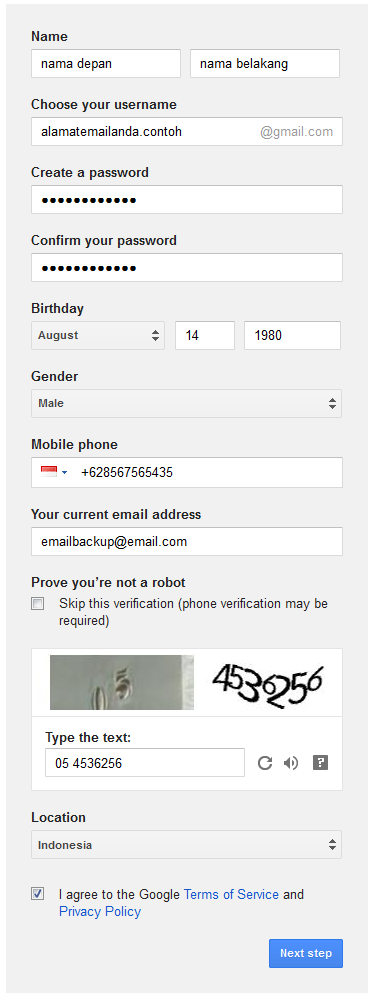
4. Fill in the data and information used the click Next Step button, button, confirm as needed, make sure telephone number, follow the procedure until it's finished.


Image titled Start a Blog on Blogger Step 3

5. Enter a Display Name and click Continue to Blogger. The display name is the name that your readers will know you by.

Image titled Start a Blog on Blogger Step 4

6. Click on Create New Blog.

Image titled Start a Blog on Blogger Step 5

7. Type a title for your blog.

Image titled Start a Blog on Blogger Step 6

8. Type a URL for your blog.
If it's unavailable try other variations on the name you want to use, but don't use symbols like hyphens, underscores, colons.

Image titled Start a Blog on Blogger Step 7

9. Enter the words verification and click Continue.

Image titled Start a Blog on Blogger Step 8

10. Choose a starter template. This is the basic design and layout of your blog.

Image titled Start a Blog on Blogger Step 9

11. Click on Create blog!.

Image titled Blogger theme settings.png
12. Click on Theme. It's near the bottom of the menu on the left side of the page. This allows you to customize the look of your blog beyond the elements contained in the starter template.


Image titled Start a Blog on Blogger Step 11


13. Select how to customize the design. Click on Customize if you'd like guided choices. Click on Edit HTML if you're a more advanced user.


Image titled Start a Blog on Blogger Step 12


14. Click on Settings. It's in the center of the menu on the left. From here, you can adjust other settings such as language, whether your blog will be included in search engine results, and whether you're willing to receive emails.


Image titled Start a Blog on Blogger Step 13

15. Click on Posts, comments and sharing. In this menu, you can adjust publishing, comments, and if or how your blog is shared beyond the Blogger platform.

Image titled Start a Blog on Blogger Step 14


16. Click on Basic and then +Add authors. The latter link is in the lower-right corner, under the "Permissions" section of the menu. This setting allows you to add other contributors to the blog, so that the writing burden does not rest on your shoulders, alone.


Resources
https://www.rfehosting.com/guides/wordpress-guides/seo/blog-important-tool-website
https://dailysocial.id/post/cara-membuat-blog-gratis-di-blogger-com
https://www.wikihow.tech/Start-a-Blog-on-Blogger
https://tenor.com/view/bt21-thank-you-bow-gif-11907309
https://www.jagoanbahasainggris.com/2017/04/materi-dan-soal-bahasa-inggris-procedure-text-kelas-7-smp.html

Kamis, 22 November 2018

Review The Power Of Habit Chapter 3&4

Assalamualaikum wr.wb
Hope you guys have amazing day!!

In this post I would like to review chapter 3&4 from a book "The Power of Habit"

Check this below!!

Chapter 3: The golden rule of habit change – why transformation occurs

You can never truly extinguish bad habits. Rather, to change a habit, you must keep the old cue, and deliver the old reward, but insert a new routine. That’s the rule; if you use the same cue, and provide the same reward, you can shift the routine and change the habit. Almost any behavior can be transformed if the cue and reward stay the same.

Anonymous alcoholics.

AA succeeds because it helps alcoholics use the same cues, and get the same reward, but it shift the routine. The program forces people to identify the cues and rewards that encourage
their alcoholic habits, and then helps them find new behaviors. To change an old habit you must address an old craving. You have to keep the same cues and rewards as before, and feed the craving by inserting a new routine.
Often, intoxication itself doesn’t make the list. Alcoholics crave a drink because it offers escape, relaxation, companionship, the blunting of anxieties, and an opportunity for
emotional release. They might crave a cocktail to forget their worries. But they don’t necessarily crave a cocktail to forget their worries. The physical effects of alcohol are often one of the least rewarding parts of drinking to addicts.
AA forces you to create new routines for what to do each night instead of drinking. AA: s methods have been refined into therapies that can be used to disrupt almost any pattern.
Often, we don’t really understand the craving driving our behaviors until we look for them.
 If you want to change a habit, you must find an alternative route, and your odds for success go up dramatically when you commit to changing as part of a group. Belief is essential, and it grows out of a communal experience, even if that community is only as large as two people.

Part two – The habits of successful organizations

Chapter 4: Keystone Habits – which habits matter most


Keystone Habits: Some habits have the power to start a chain reaction, changing other habits as they move through an organization. Some habits, in other words, matter more than others in remaking businesses and lives. These are Keystone Habits, and they can influence how people work, eat, play, live, spend, and communicate. Keystone habits start a process that, over time, transforms everything.

Keystone habits say that success doesn’t depend on getting every single thing right, but instead relies on identifying a few key priorities and fashioning them into powerful levels. The habits that matter the most are the ones that, when they start to shift, dislodge and remake other patterns.
Families who habitually eat dinner together seem to raise children with better homework skills, higher grades, greater motional skills, and more confidence.
Detecting keystone habits means searching out certain characteristics. Keystone habits offer what is known within academic literature as “small wins”. They help other habits to flourish by creating new structures, and they establish cultures where change becomes contagious. Small wins are part of how keystone habits create widespread changes. Small wins are a steady application of a small advantage. Once a small win has been accomplished, forces are set in motion that favors another small win. Small wins fuel transformative changes by leveraging tiny advantages into patterns that convince people that bigger achievements are within reach.

Small wins: Small wins do not combine in a neat, linear, serial form, with each step being a demonstrable step closer to some predetermined goal. More common is the circumstance where small wins are scattered like miniature experiments that test implicit theories about resistance and opportunity and uncover both resources and barriers that were invisible before the situation was stirred up.

Keystone habits encourage change by creating structures that help other habits to flourish. Keystone habits transform us by creating cultures that make clear the values that, in the heat of a difficult decision or a moment of uncertainty, we might otherwise forget.

Jumat, 16 November 2018

Review The Power Of Habit Chapter 1&2

Assalamualaikum wr.wb ^_^
Hello,Friend!!
Hope you guys who read this blog have amazing day!!

In this post, I would like to review chapter 1&2 from an amazing book entitled The Power of Habit by Charles Duhigg. Check this bellow!!


Part one – The habits of individuals
Chapter 1: The habit loop – how habits work
Habits emerge because the brain is constantly looking for ways to save effort.
The Basal Ganglia stores habits for us, and once stored we don’t need to use our rational part of the brain to execute. We just access our habits in “automated mode”, and it all goes very quickly.
The process of making a routine into a habit is called “chunking”. The brain activity spikes at the beginning of a habit, when it’s looking for a cue. And spikes again at the end, when a reward is usually present. In between spikes, the brain relinquishes control to the habit.The habit then consists of three steps:
  1. Cue : a trigger telling the brain to go into automatic mode. Depending on the trigger the brain selects a specific routine
  2. Routine : physical, mental or emotional behavior that follows automatically
  3. Reward : positive result telling our brain if this loop is worth memorizing
Cue –routine – reward


Over time, this loop becomes more and more automatic. The cue and reward become intertwined until a powerful sense of anticipation and craving emerges. Eventually, a habit is born.
When a habit emerges, the brain stops fully participating in decision making. It stops working so hard, or diverts focus to other tasks. So unless you deliberately fight a habit – unless you find new routines – the pattern will unfold automatically.
Habits never really disappear. They are encoded into the structures of our brain.
If we learn to create new neurological routines that overpower those behaviors – if we take control of the habit loop – we can force those bad tendencies into the background. And once someone creates a new pattern, studies have demonstrated, going for a jog or ignoring the doughnuts becomes as automatic as any other habit.
Habits, as much as memory and reason, are at the root of how we behave. We might not remember the experiences that create our habits, but once they are lodged within our brains the influence how we act – often without our realization.
Chapter 2: The craving brain – how to create new habits

Craving is what makes cues and rewards work. The craving is what powers the habit loop.
1. Find a simple and obvious cue
2. Clearly define the rewards
Habits create neurological cravings. As we associate cues with certain rewards, a subconscious craving emerges in our brain that starts the habit loop spinning.
How to create a new habit: put together a cue, a routine and a reward, and then cultivate a craving that drives the loop.
A cue and a reward on their own aren’t enough for a new habit to last. Only when your brain starts expecting the reward – craving the endorphins or sense of accomplishment – will it become automatic to lace up your jogging shoes each morning. The cue, in addition to triggering a routine, must also trigger a craving for the reward to come.